Digital twins for industry: use cases, figures and getting started
Table of contents
- What is a digital twin in industry (without the jargon)?
- What is it actually used for? 4 use cases
- What studies on the industrial digital twin reveal
- Where to start? Three steps for SMEs and mid-market companies
- What we do with digital twins
- The technologies that make the digital twin possible
- Towards the AI-enhanced digital twin
- Conclusion
- Sources
- FAQ
Imagine being able to test a change on your production line without shutting down a single machine, or detecting a breakdown before it happens. Many industrial companies are already doing this, using an industrial digital twin. Yet this technology is often still perceived as complex, inaccessible and the preserve of industrial giants. In practice, it is more accessible and cost-effective than one might imagine.
The pressure on costs, productivity and time-to-market has never been greater. Unplanned breakdowns, delayed launches and costly operator training: these issues have a direct impact on the bottom line. The industrial digital twin addresses all three of these challenges at once, backed up by supporting figures and practical steps to get started, even for SMEs and mid-market companies.
What is a digital twin in industry (without the jargon)?
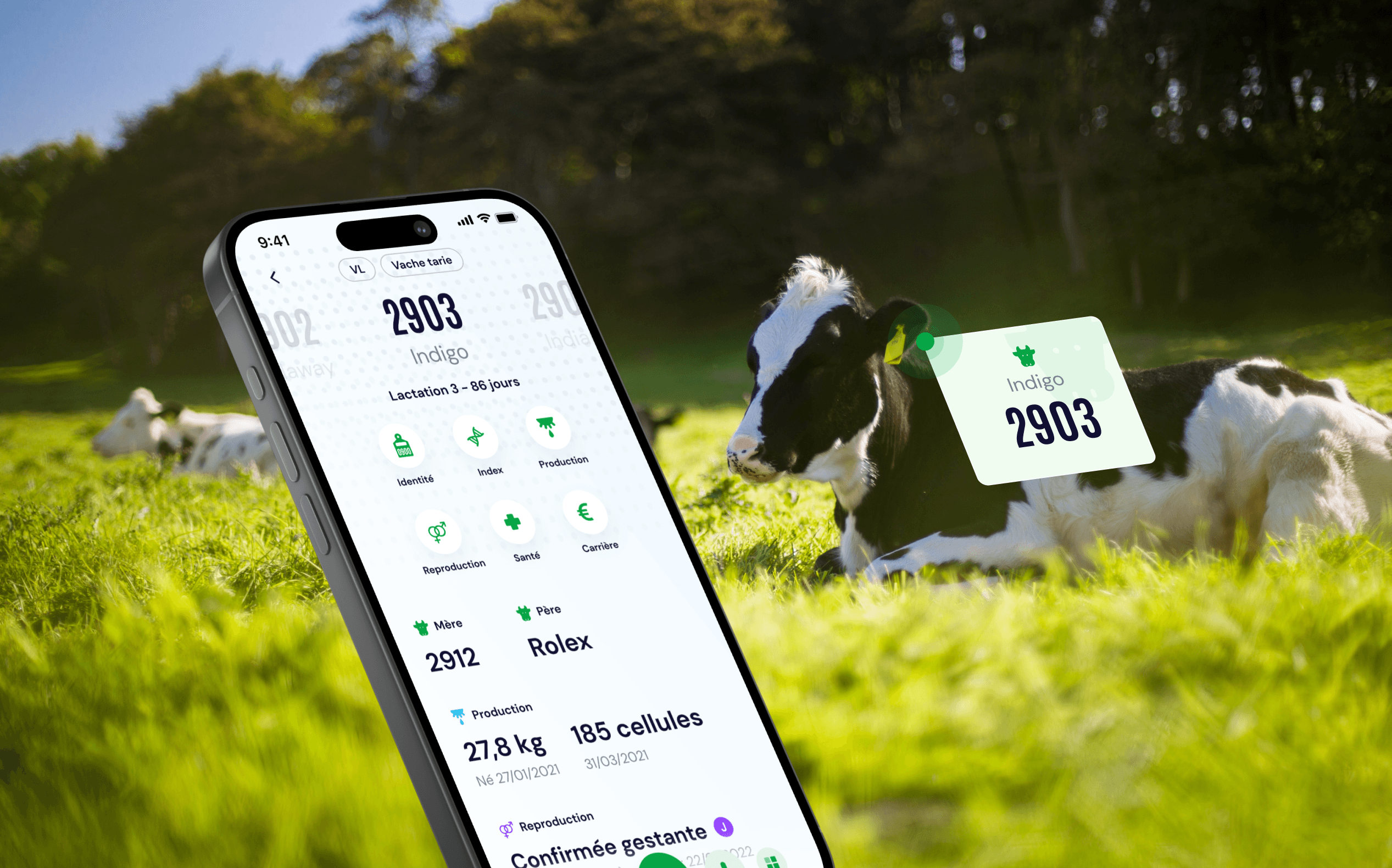
An industrial digital twin is a dynamic virtual replica of a product, a machine, a process or an entire factory, fed in real time by data from the physical world. Unlike a 3D model or a one-off simulation, it evolves continuously: connected to the equipment, it changes as the equipment generates data.
A functional digital twin is based on four components:
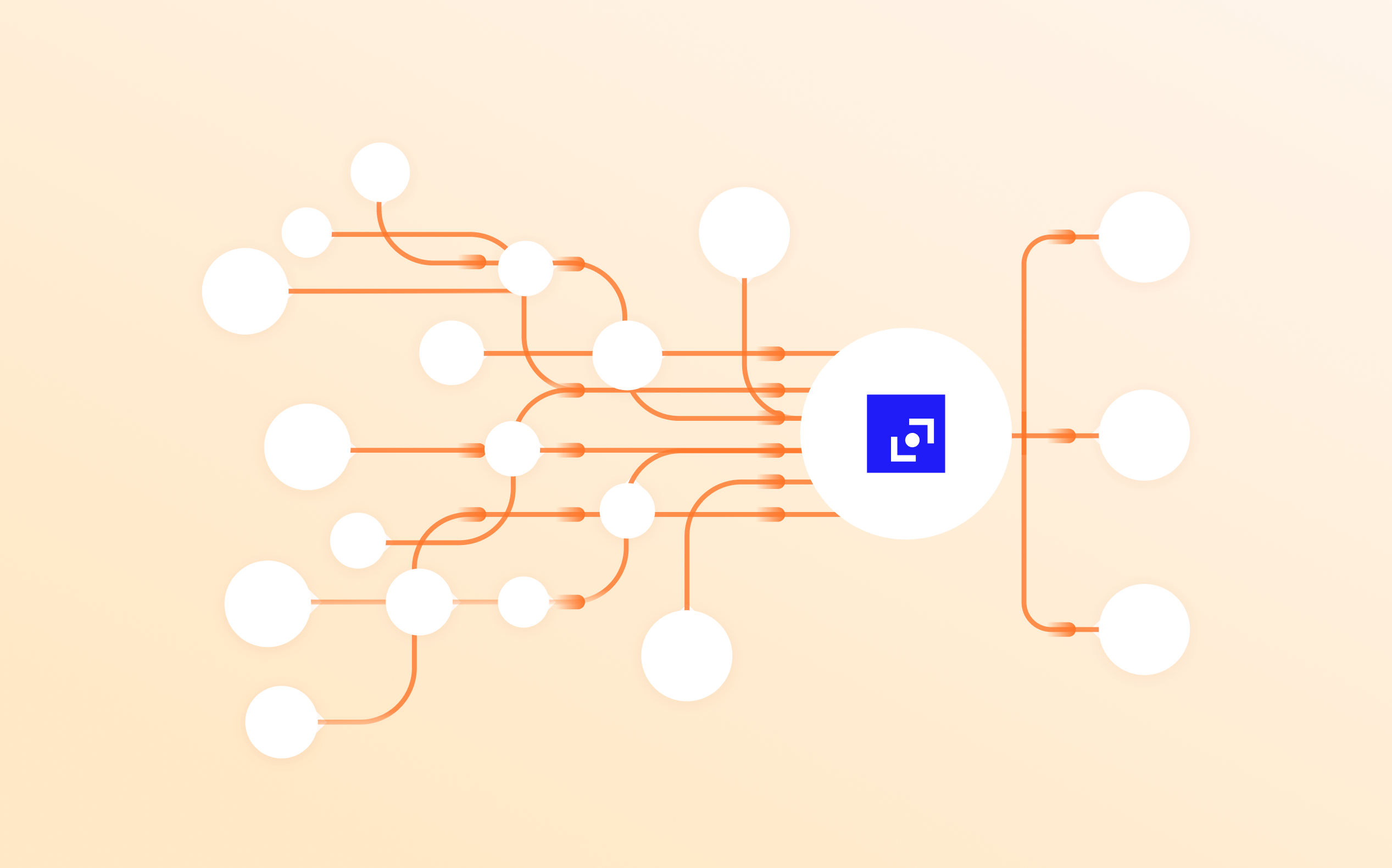
Real-time data: sensors, APIs, PLM and ERP systems that continuously feed data into the virtual model.
A reliable mathematical model: an accurate representation of the behaviour of the physical system.
Embedded intelligence: simulation, prediction and continuous adjustment, based on AI and machine learning.
Feedback: the insights generated drive specific actions on the production floor (alerts, orders, recommendations).
Unlike a traditional simulation, the industrial digital twin operates continuously: it learns, adapts and creates value day after day. The common misconception that such a project is necessarily a long-term one does not hold true: the first results can be seen within a few weeks, on a limited scale.
What is it actually used for? 4 use cases
Maintenance: moving from repair to prediction
Most factories still operate in a reactive mode: a breakdown occurs, production is halted, and repairs are carried out. This is costly and unpredictable. The industrial digital twin enables us to move away from this reactive approach through predictive maintenance: by analysing operating patterns in the twin, the maintenance team can detect early warning signs of a fault and take action before the machine breaks down.
What the studies show: several sector-specific analyses indicate a 30–45 per cent reduction in unplanned downtime when predictive maintenance is supported by a digital twin, with maintenance costs falling by around 20–30 per cent depending on the size of the site.
Production: adjusting flows in real time
Production managers deal with numerous variables on a daily basis: production rates, scheduling, quality and energy consumption. The industrial digital twin simulates the impact of each decision before it is implemented on the actual production line. In particular, it enables managers to assess the impact of increasing the production rate on quality, or to identify the most effective settings for reducing energy consumption, before any changes are made to the actual production line.
What the studies show: McKinsey details a case study of a digital twin of a factory being used to redesign a production schedule and reduce overtime on an assembly line, resulting in cost savings of 5 to 7 per cent per month.
Design (R&D): designing faster and at lower cost
Designing a new product traditionally involves a lengthy cycle: prototypes, testing, modifications, new prototypes. The industrial digital twin makes it possible to virtually test dozens of iterations in just a few days (thermal performance, assembly feasibility, strength) before producing the first physical prototype.
What the studies show: according to McKinsey, companies that incorporate a digital twin from the design stage reduce their development time by 20 to 50 per cent, and the number of physical prototypes required often falls from two or three to just one. A documented case study in the automotive sector also shows a 15 to 25 per cent reduction in time to market.
Training: train your teams without risk or disruption to production
Training a new operator on a critical machine has traditionally been time-consuming and risky. With a digital twin, new recruits learn through immersive simulation, make mistakes without any real-world consequences, and enter production already experienced.
What the studies show : is that results vary significantly depending on the sector and the training programme, with reductions in training time ranging from 35 per cent to over 70 per cent in some documented cases. This is the least well-established use case of the four: it should be tested on a limited scale before any significant budgetary commitment is made.
What studies on the industrial digital twin reveal
Indicator | Amélioration observée | Source |
Unplanned stops | −30 à −45 % | Oxmaint, WorkTrek |
Maintenance costs | −20 to −30 % | Oxmaint, WorkTrek |
Product development time | −20 to −50 % | McKinsey |
Physical prototypes required | de 2-3 to 1 | McKinsey |
Time to market (automotive sector) | −15 to −25 % | McKinsey |
Monthly production cost (assembly line) | −5 to −7 % | McKinsey |
Training duration (immersive) | −35 to −75 % (varying degrees) | Van Meter, ArborXR, Meta for Work |
These figures are taken from studies and documented case studies (notably McKinsey, as well as several sector-specific reports) covering projects of varying sizes and across different sectors. They provide an indication of the scale involved, not a guarantee: the outcome depends on the starting point and the scope selected. Details of the sources are given at the end of the article.
Key takeaway: don’t look for a perfect match straight away. Start with the use case that has the greatest impact on your costs, then expand gradually.
Where to start? Three steps for SMEs and mid-market companies
Step 1: Identify the priority issue
Start with a clear, quantifiable objective. Identify the most costly issues facing your factory – whether they relate to breakdowns, quality, time-to-market or excess energy costs – and focus on the one that causes the greatest losses. A comprehensive industrial digital twin may be considered at a later stage; start with a digital twin targeted at this specific problem.
Step 2: Assess the maturity of your data
The digital twin relies on data. Before you begin, you should check whether your critical machinery is fitted with sensors, whether your ERP, MES or SCADA systems are connected, and whether you have a usable historical data set. This assessment, which can be carried out within a short timeframe, will indicate whether it is possible to start immediately or whether the existing infrastructure needs to be upgraded first.
Step 3: Launch a pilot project
Choose a narrow scope: a critical machine, a key process, or a product range. Work with an experienced technology partner. Aim to produce a working prototype within 8 to 12 weeks. Measure the results accurately. If the return on investment is confirmed, this will justify extending the scope.
Point to watch out for : Avoid ‘full Industry 4.0’ projects that drag on for two years at a cost of one million euros. Opt instead for short, focused cycles that deliver a return on investment within 3 to 6 months.Ce que nous faisons sur les jumeaux numériques.
What we do with digital twins
BeTomorrow supports large corporations, SMEs and mid-market industrial companies in the design and deployment of digital twins across targeted areas: a critical machine, a key process or a product range. We are involved throughout the entire process: assessing data maturity (sensors, ERP, MES, SCADA), designing the virtual model, integrating predictive algorithms and AI, and connecting to existing systems via APIs. Our projects follow a short pilot format (8 to 12 weeks), with a specific financial objective before any expansion of the scope. We work on the four use cases presented in this guide: predictive maintenance, production flow optimisation, accelerated R&D, and immersive operator training. We provide support for everything from the initial scoping to technical deployment and integration with visualisation tools (augmented reality, virtual reality).
Our approach to digital twins: starting with use cases, prototyping, integrating
At BeTomorrow, we view digital twins as operational tools rather than merely technological ones. Their value does not stem solely from 3D modelling, simulation or AI, but from their ability to serve a clear purpose: to make decisions, understand, monitor, train, simulate or demonstrate.
Our approach is based on five principles: starting with business needs, rapid prototyping, progressive simulation, designing for integration with existing systems, and considering from the outset how the solution will be used by frontline teams or decision-makers. An initial demonstrator helps to bring the vision to life, reduce risks and build consensus amongst stakeholders before expanding the scope.
This approach has been put into practice, in particular, through several collaborations with Thales focusing on simulation, 3D, mobility and complex systems. On the TerraData / TerraNumerica project, BeTomorrow contributed to 3D digital urban models, using a remote and embedded rendering engine designed for mobile use. On the Terra Dynamica project, work focused on the real-time simulation of crowds, traffic and intelligent agents, within the framework of a dynamic city. Other confidential projects have also involved the use of 3D-synthesised video streams and the integration of complex databases into highly constrained environments.
These experiences show that an effective digital twin is not merely a reproduction of reality. It must make a system understandable, usable and useful for decision-making, whilst integrating into an existing technical, business and organisational context.
The technologies that make the digital twin possible
The industrial digital twin is based on a convergent technology stack:
IoT and sensors: raw data from the physical world.
Cloud and Edge Computing: storage and processing of the virtual model.
AI and Machine Learning: predictive analytics and continuous optimisation.
Augmented/Virtual Reality: immersive visualisation for your field teams.
APIs and integrations: connection with your existing systems (ERP, MES, PLM).
None of these building blocks are new or mysterious: it is their combination, tailored to your context, that creates value.
Towards the AI-enhanced digital twin
The market is evolving rapidly in this area. At major industry events in 2026 (NVIDIA GTC, Hannover Messe), NVIDIA, Siemens and Microsoft presented architectures that go beyond traditional 3D simulation. Siemens has integrated the NVIDIA Omniverse libraries into its Digital Twin Composer solution to transform engineering and operational data into a digital twin ready for simulation, with the aim of identifying production issues before any physical changes are made. Microsoft, for its part, presented an architecture combining Omniverse and Microsoft Fabric Real-Time Intelligence for real-time physical simulations, complemented by a suite of tools dedicated to deploying physical AI in production.
The term that keeps cropping up in these announcements is ‘physical AI’. Rather than simply representing a system, the digital twin becomes a tool for testing scenarios and guiding decision-making before a decision is implemented in the real world.
The term that keeps cropping up in these announcements is ‘physical AI’. Rather than simply representing a system, the digital twin becomes a tool for testing scenarios and guiding decision-making before a decision is implemented in the real world.
Conclusion
The industrial digital twin is not just a technological fad: the studies cited in this article, which highlight fewer breakdowns, less waste, shorter training times and greater agility in R&D – relate to real-world projects carried out in industrial companies.
The approach remains the same: start small, target the right areas, and measure rigorously. Rather than aiming for a fully-fledged Industry 4.0 factory from day one, it is better to identify a costly problem, launch a pilot scheme, demonstrate the results, and then scale up.
Your competitors are also making headway in this area, some faster than others. The first profitable use case is often closer than you might think.
Discuss your use case with our team
Sources
McKinsey & Company, « What is digital-twin technology? »
McKinsey & Company, « Digital twins in manufacturing & product development »
McKinsey & Company, « Transforming manufacturing with digital twins »
McKinsey & Company, « Product Digital Twins »
Oxmaint, « Digital Twin in Manufacturing (Predict Failures & Optimize) »,
WorkTrek, « 8 Trends Shaping the Future of Predictive Maintenance »,
Van Meter Inc., « How AR and VR are transforming training in manufacturing »
Meta for Work, « How VR improves enterprise business efficiency »
FREQUENTLY ASKED QUESTIONS – DIGITAL TWINS IN INDUSTRY
What is the difference between a digital twin and a conventional simulation?
Simulation is a static tool that is run on an ad hoc basis to test a scenario. The industrial digital twin, on the other hand, operates continuously, is updated in real time, and learns from the physical system to which it is connected. There is no beginning or end: it evolves alongside the equipment and creates a continuous loop of operational feedback.
Is the industrial digital twin only for large corporations?
No. An SME or mid-sized company can certainly get started with a single machine or a limited process, within a few weeks and at a reasonable cost. The myth that digital twins are tools reserved for industrial giants quickly disappears once you see them in action within a small organisation.
What are the minimum technical requirements to get started?
Three conditions are all that is needed: a few sensors or a connection to existing control systems, a minimum amount of historical data (a few months is often enough), and a team willing to experiment. A complete IT overhaul is not necessary at the outset.
How long will it take to see the first tangible results?
A well-structured project can deliver measurable results within 6 to 8 weeks. The return on investment can be positive from the very first months if the targeted issue is already costly at present (predictive maintenance or a production bottleneck, for example).
How can we justify the investment to senior management?
The aim is to quantify the expected benefit precisely: “If we reduce unplanned downtime by 30 per cent, we will save X euros a year. The pilot project costs Y, and the return on investment is achieved in Z months.” A pilot project with a limited scope and low financial risk facilitates this discussion and demonstrates the value before any large-scale commitment is made.