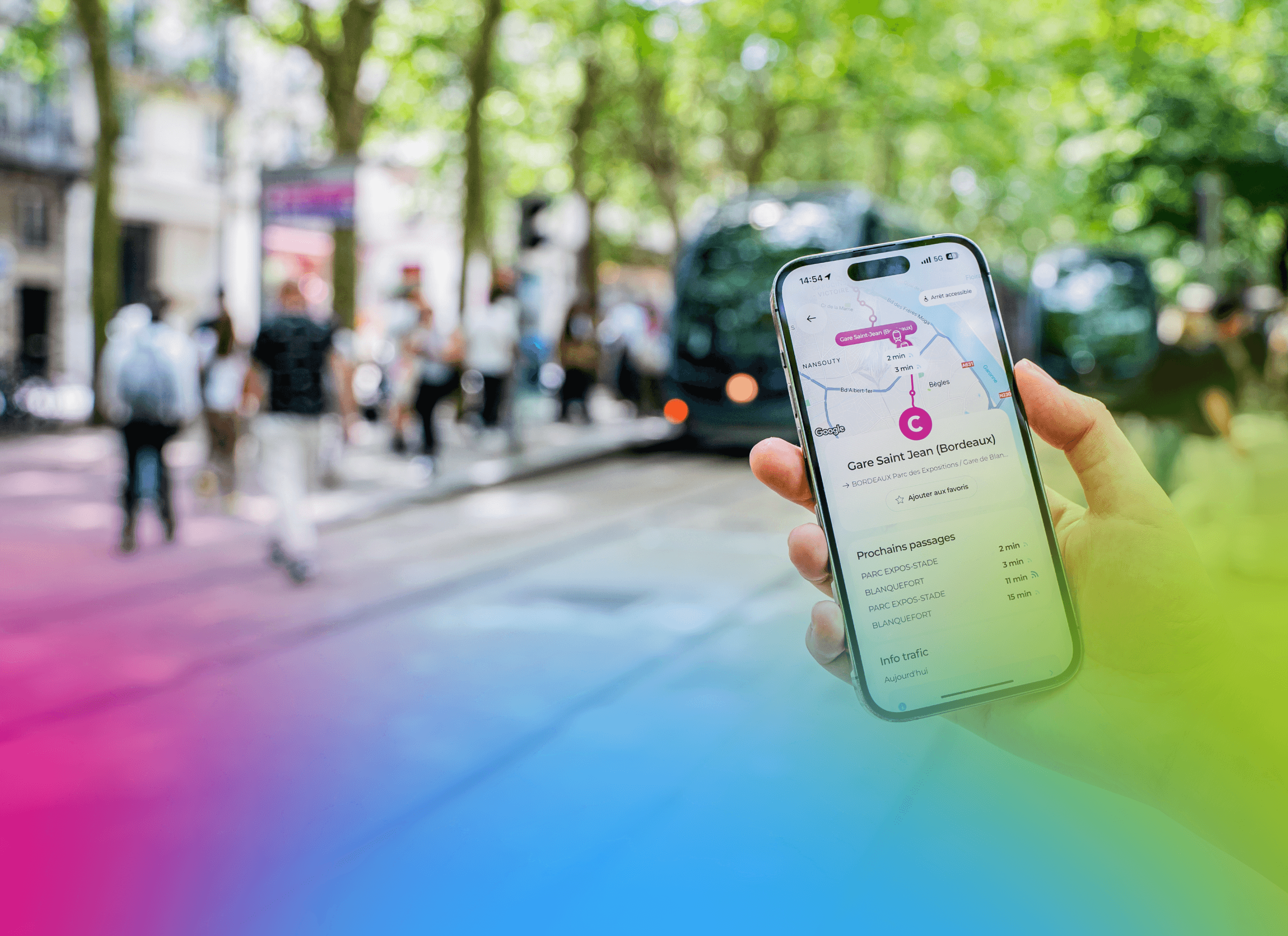
The first Level 3 MaaS application on a French metropolitan scale
EXPERTISES
As part of its TBM operating contract with Bordeaux Métropole, Keolis Bordeaux Métropole Mobilités wanted to develop a new Level 3 MaaS (Mobility as a Service) mobile application capable of unifying all mobility services in the region, while integrating with an existing information system and an already structured ecosystem of partners.
The challenge was not only to create a new application, but also to lay the foundations for a scalable, reliable and controlled mobility platform that would serve both users and the local authority's objectives.
Following a call for tenders, BeTomorrow was selected to act as the application's global integrator, with the task of designing, orchestrating and securing a complex ecosystem, coordinating more than a dozen mobility service providers.
millions of trips
Per year across the entire Bordeaux Métropole network
active users
Per month on KB2M's various modes of transport
service providers
To be coordinated to feed the content displayed in the TBM application
CHALLENGES
Product
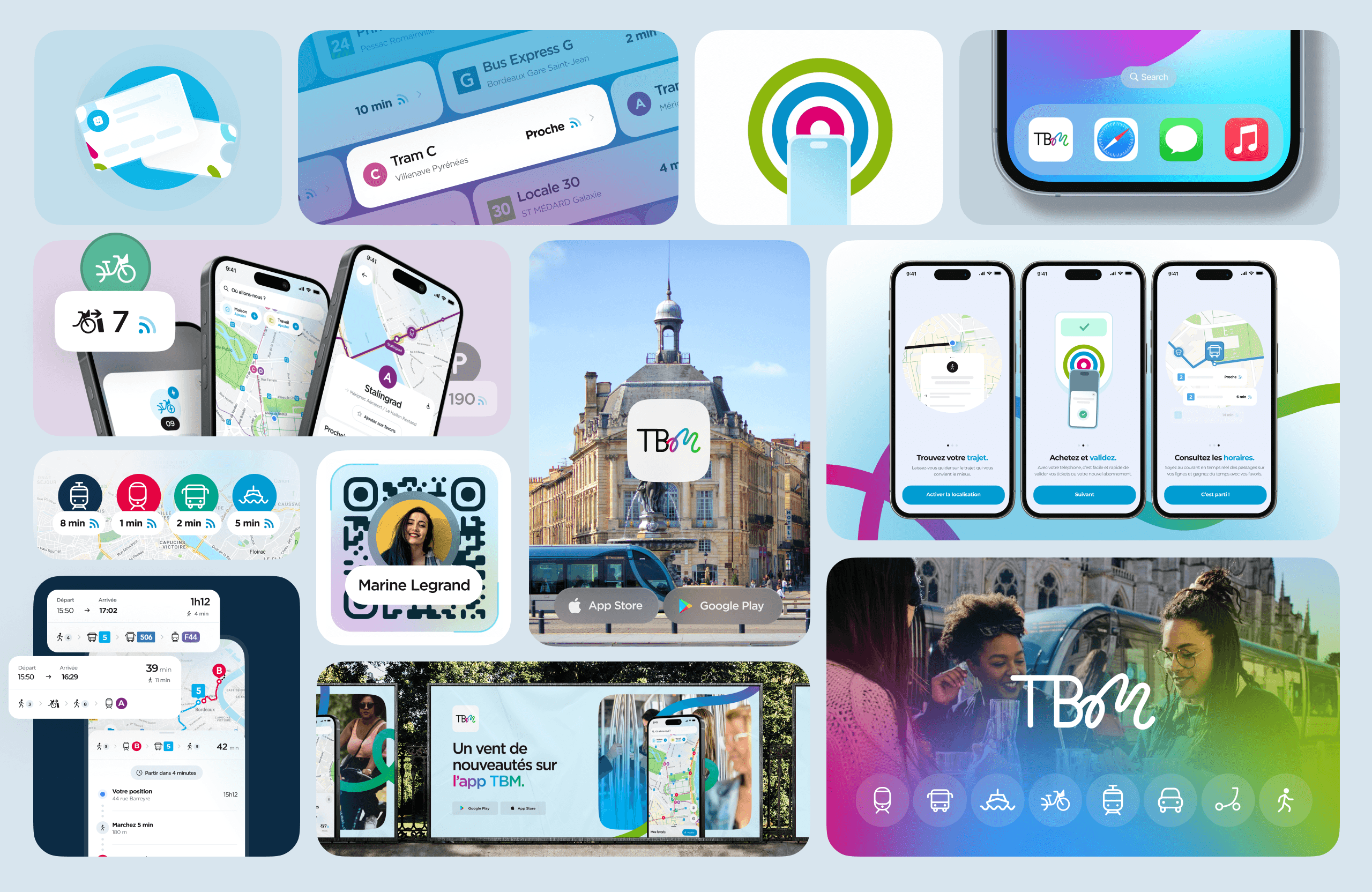
One of the major challenges in designing the new TBM mobile app was to evolve the app into a true MaaS product, capable of promoting the diversity of metropolitan mobility options while ensuring a smooth, clear and accessible experience for all users, regardless of their usage patterns or level of digital literacy.
This ambition resulted in several key product challenges:
Showcasing the wealth of metropolitan mobility options
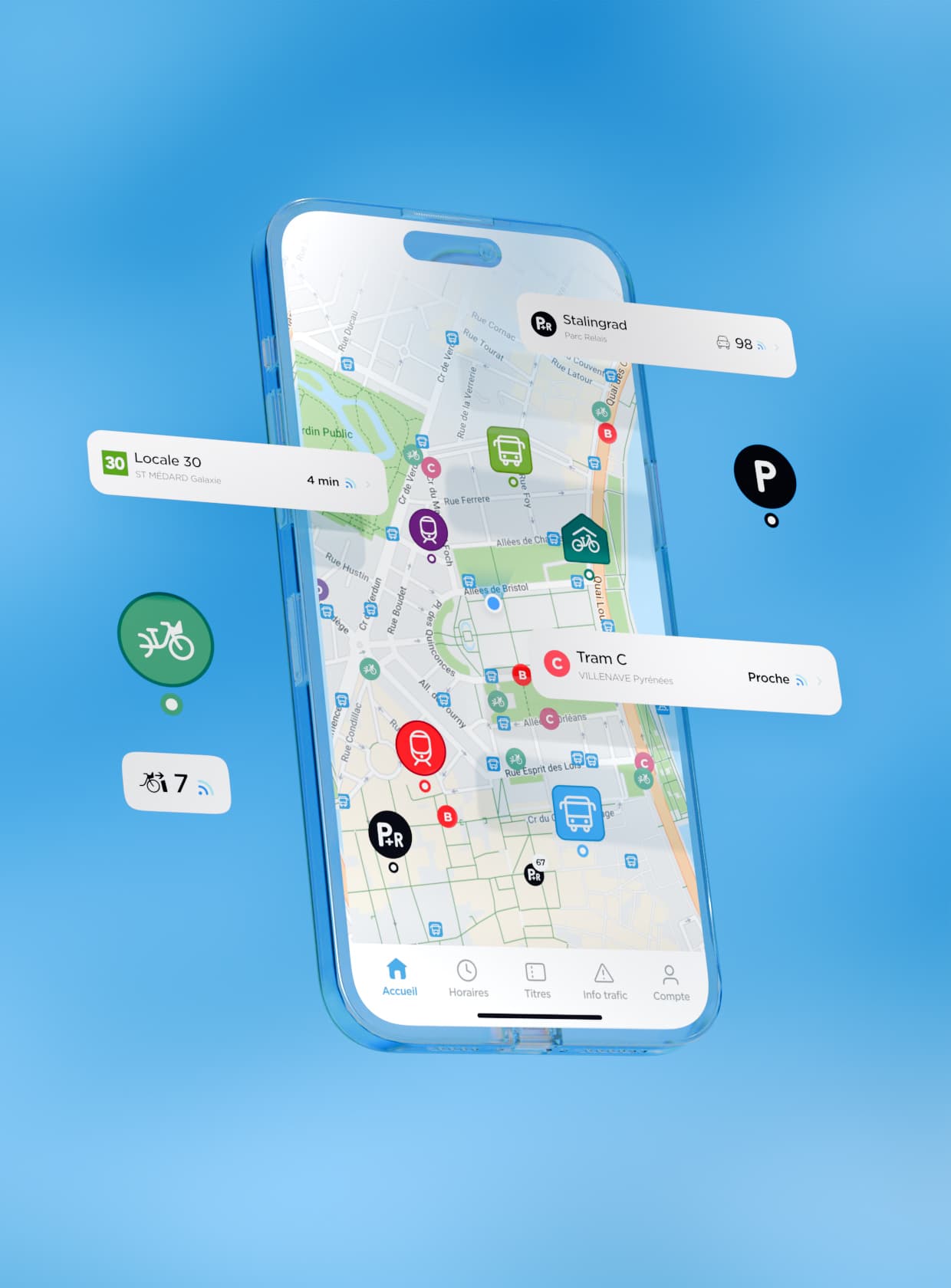
The Bordeaux metropolitan area has a particularly extensive transport offering. The product approach was to place the interactive map at the heart of the navigation, right from the home screen, in order to make all the mobility solutions available to the user visible and accessible, and to encourage the discovery of new modes, such as cycling, depending on the geographical context.
Rethinking the display of timetables for mobile use
Timetables are a central part of the user journey. The challenge was to move beyond the traditional tabular timetables and offer a display mode designed specifically for mobile devices, which is more readable, more intuitive and reduces the risk of misreading, particularly when on the move.
Streamlining an inherently complex subscription process
Managing transport tickets, whether season tickets, e-tickets or everyday tickets, is a key part of the mobility experience. The challenge of the project was to make mobile devices a reliable and universal means of accessing tickets, ensuring a clear and seamless experience regardless of usage and situation.
Linking the mobile experience with physical uses
Certain features, such as unlocking a bicycle from the app, require perfect coordination between the mobile interface and physical objects. These processes were designed by systematically placing ourselves in the user's real-life situation at the station, in order to guarantee a fast, understandable and frictionless experience.
Design
The design of the new TBM mobile app was accompanied by in-depth work on visual identity and graphic codes, with a clear objective: to use design as a lever for readability, trust and ownership for a multimodal public transport service.
Rather than breaking with the past, our approach was to build on TBM's existing identity, respecting its codes while evolving them to meet current digital uses and the requirements of a level 3 MaaS product.
The new graphic codes were developed in close collaboration with TBM's communications teams to ensure perfect consistency between the functional challenges, the user experience and the institutional image conveyed by the application.
Tech
The technical design of the TBM mobile application was conceived as the foundation for a robust, scalable digital platform capable of handling the complexity of a metropolitan mobility ecosystem.
The mobile application, developed using cross-platform technology, is based on a Backend For Frontend (BFF) architecture designed and implemented by the BeTomorrow teams. This BFF plays a central role in decoupling the mobile application from third-party services, masking the specificities of the various providers and offering a unified and controlled interface.
One of the major technical challenges of the project was to design a BFF capable of supporting high loads while ensuring consistent performance and service continuity, even during peak usage times or exceptional events.
This architecture enables Keolis Bordeaux Métropole Mobilités and the metropolitan area to evolve the platform over time, integrate new mobility services and limit dependencies on suppliers, while securing the operation of a critical digital service.
Marketing
The launch of a MaaS application on a metropolitan scale is a major strategic challenge, where user adoption directly determines the success of the project.
BeTomorrow supported Keolis Bordeaux Métropole Mobilités in defining and deploying a structured Go To Market plan, covering both the launch of the application and the months following its rollout.
The application includes a customer engagement tool that allows messages to be personalised, usage to be analysed and product optimisations to be continuously guided, with a view to continuous improvement and data-driven management.
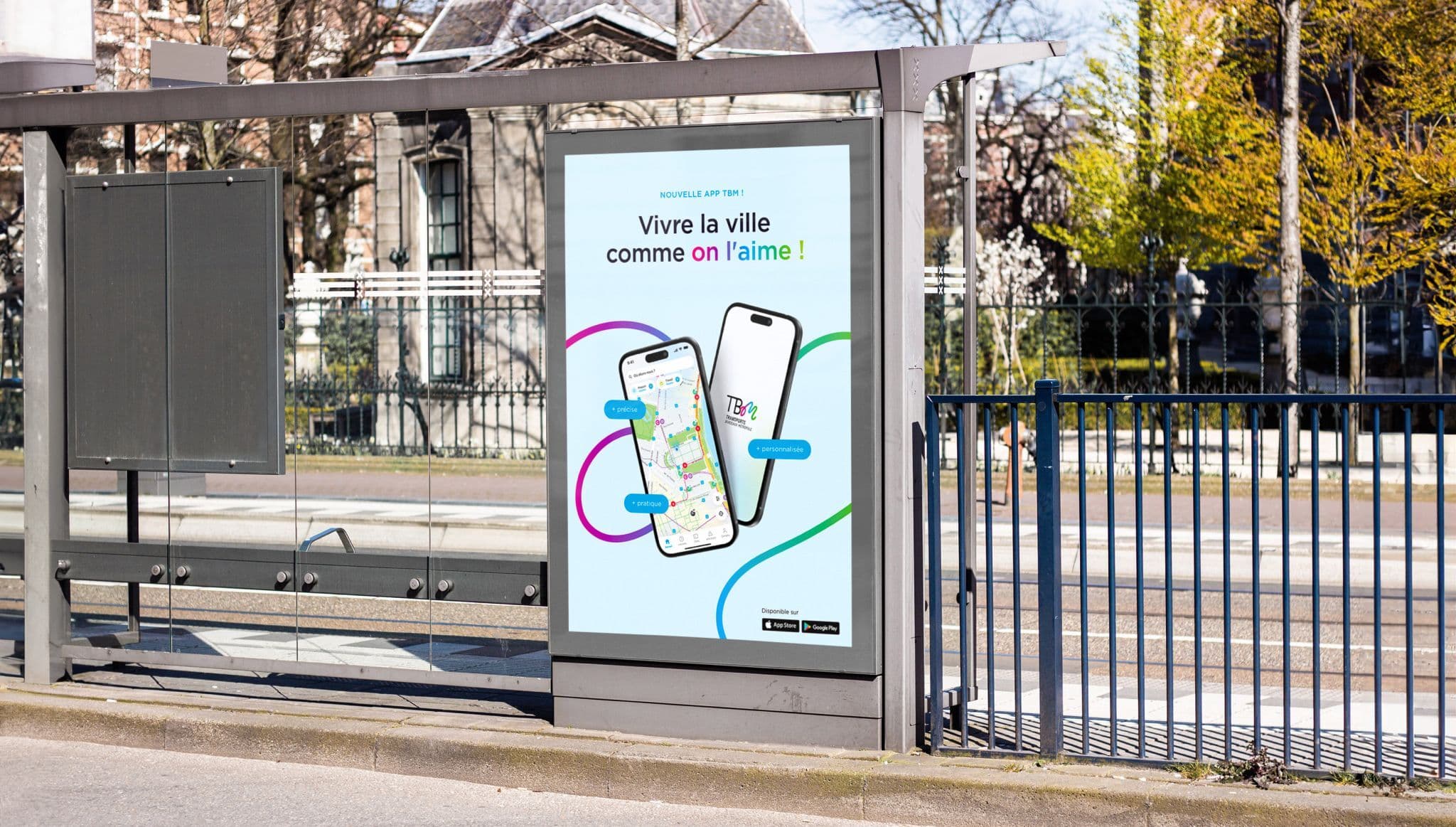
A marketing branding plan was put in place, accompanied by a comprehensive communication plan and dedicated artistic direction, to ensure consistent and uniform deployment across all communication channels.
This system was supplemented by the definition of key performance indicators (KPIs) to measure the adoption, usage and performance of the application, as well as associated methods to ensure regular monitoring.
Agility
In a MaaS project of this scale, involving numerous stakeholders and technical dependencies, agility is an essential lever for securing the project. As the main integrator of the application, BeTomorrow consolidated all technical and business aspects, as well as third-party APIs provided by Keolis Bordeaux Métropole Mobilités and its partners, within a common framework.
Maintaining fluid and structured communication between all stakeholders was a key challenge, both in terms of aligning decisions and anticipating and managing the impacts of functional or technical changes.
The BeTomorrow teams, drawing on their experience in complex digital projects, implemented an agile system adapted to the multi-stakeholder context: shared rituals, synchronisation instances and iterative cycles enabling continuous analysis of priorities, collective decision-making and guaranteed involvement of all parties throughout the development process.
WHEN A BESPOKE APPROACH — MAKES ALL THE DIFFERENCE
This type of project illustrates situations where complexity cannot be resolved by a standardised solution. When user needs, existing systems and business challenges require a bespoke design, value lies as much in the experience offered as in the ability to sustainably manage a critical digital platform. BeTomorrow’s approach therefore involves designing digital experiences and products tailored to each context, by integrating design, product, technology and governance. Whether for MaaS projects or large-scale mobility platforms, this ability to build specific, robust and scalable solutions enables us to support organisations facing complex, highly constrained and exposed environments.

CÉLINE LEMOIGNE
Product Manager
TBM is used daily by thousands of users. Through tests and interviews with our users, we have adapted our approach to effectively meet the needs encountered in the field. To achieve this, we relied on our expertise in mobile best practices and user-centered design. It is the key to ensuring the final product meets market expectations.
Our Client
TBM (Transports Bordeaux Métropole), operated by Keolis Bordeaux Métropole Mobilités on behalf of Bordeaux Métropole, is one of France's leading urban transport networks. Through its range of services, TBM addresses key issues such as accessibility, modal shift and reducing dependence on private cars, in line with the region's public mobility policies.
The network offers an extensive multimodal service, integrating public transport, active mobility solutions such as walking and cycling, and complementary services, with the aim of facilitating everyday travel and supporting changing usage patterns across the metropolitan area.

AURÉLIEN BRAUD
Marketing Director - Keolis Bordeaux
We were impressed by BeTomorrow's approach and their ability to mobilize all the necessary mobile expertise gathered under one roof. We found in their teams a level of rigor and skills that matched our ambitions and the complexity of this project.