SES : global pioneer in satellite services
EXPERTISES
SES’s services: video, networks and global connectivity
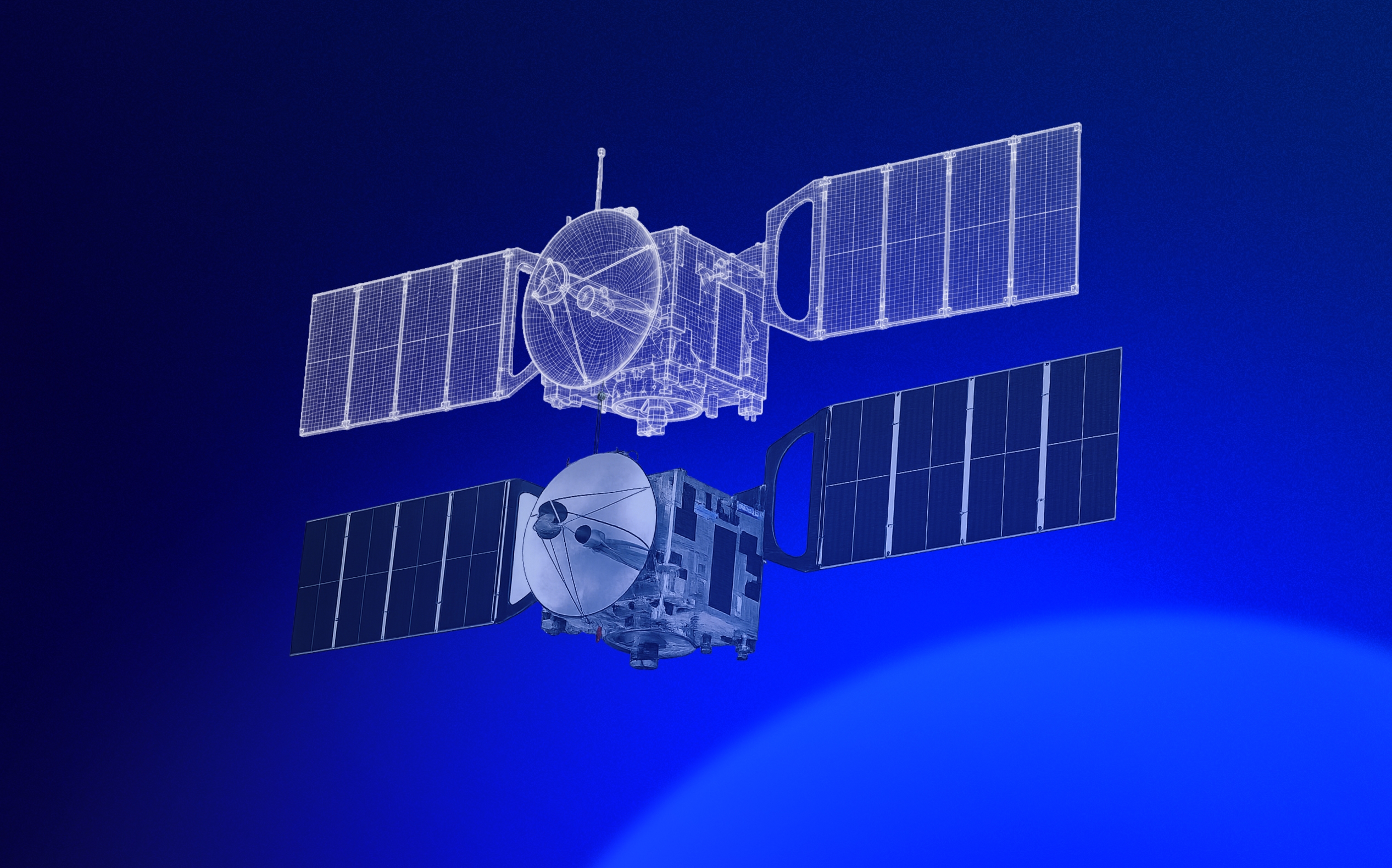
The European Satellite Company, SES S.A., is a leading provider of satellite communication solutions, serving media, telecommunications, businesses and governments worldwide. With a fleet of over 70 satellites and a global network of ground infrastructure, SES connects a large proportion of the world’s population and plays a key role in video broadcasting, networks and international connectivity.
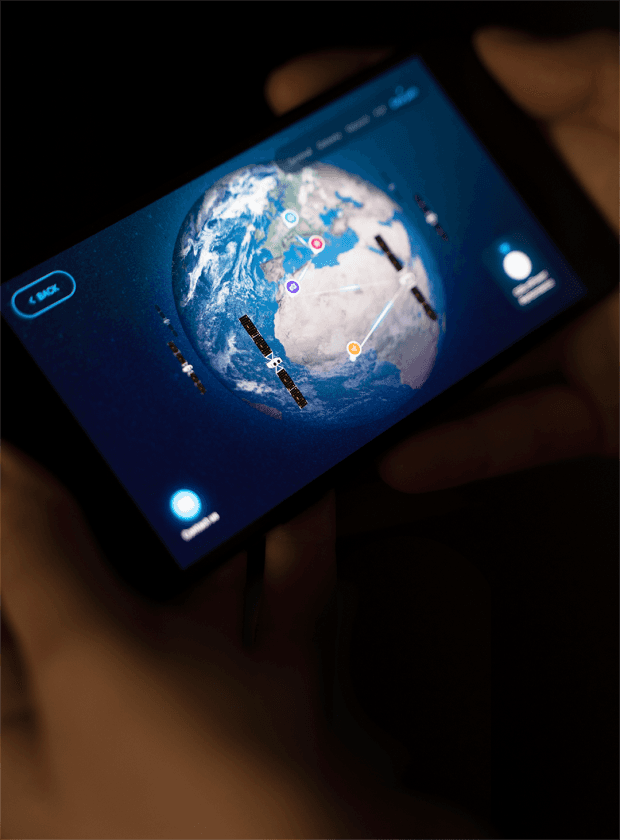
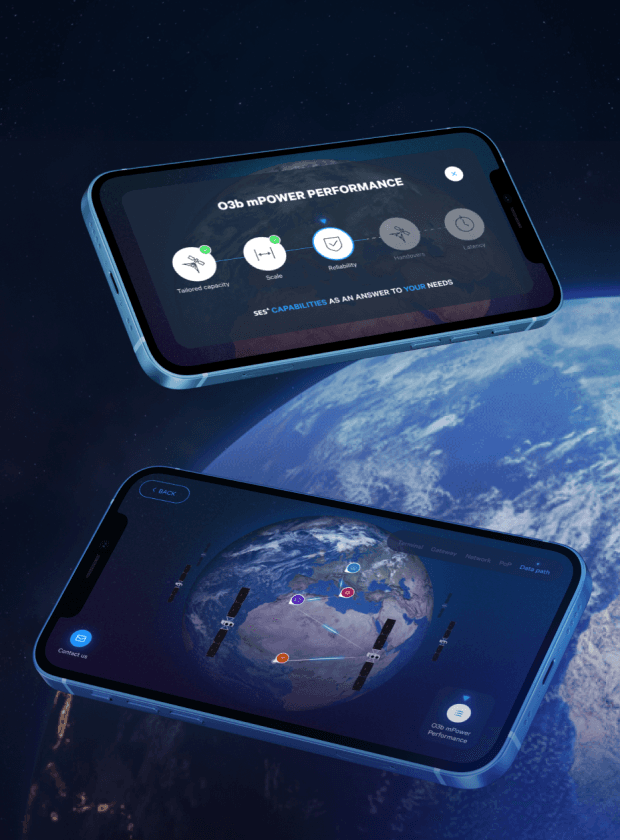
BeTomorrow supported SES in the redesign of its existing application to transform it into a more modern, immersive and effective sales tool. Designed with interactive 3D and a cross-platform approach , this new experience enables SES teams to better showcase their services, engage prospects and support business interactions, particularly at trade events such as exhibitions.
SES satellites
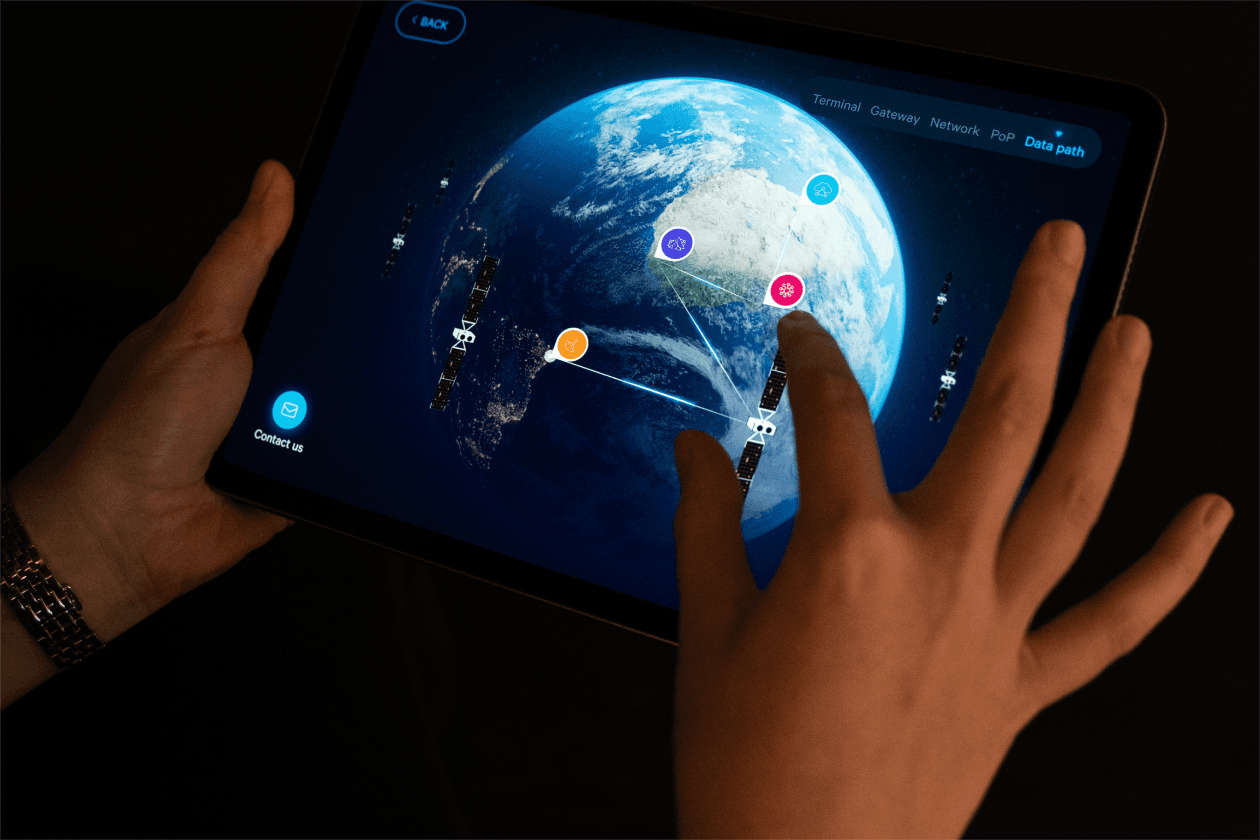
displayed in an interactive 3D globe
types of platform
are covered by the application
of the world's population
is reached by SES customers
CHALLENGES
Tech
The technical challenge was to model and make SES’s GEO/LEO satellite coverage accessible within an interactive 3D experience that was astronomically accurate and smooth. Developed using React and Unity, the application is built on a codebase designed to be deployed across multiple environments: native iOS and Android versions for mobiles and tablets, a large-format touchscreen PC version for trade shows, and a WebGL version compatible with PC and Mac without the need for a plug-in. The challenge was to ensure a stable, high-performance and consistent experience across all devices, whilst facilitating high-stakes sales demonstrations.
Design
GEO/LEO coverage, constellations and service areas are highly technical subjects. The design challenge was to transform this complex data into a clear, immersive and immediately understandable experience, in order to help sales engineers demonstrate the value of SES’s offerings to prospective clients, particularly at international trade fairs.
SALES ENABLEMENT: WHEN TECHNOLOGY BECOMES A KEY DRIVER OF SUCCESS FOR THE SPACE SECTOR
This project perfectly illustrates a situation where technology is used not merely to produce, but to persuade.
By combining 3D, cross platform technology and interactive experiences, BeTomorrow did not simply modernise an existing tool. This approach transformed a complex technical narrative into an accessible, engaging experience that can be directly leveraged in a commercial context.
In sectors such as the space industry, where value is difficult to perceive without specialist knowledge, this ability to make the invisible visible becomes a major strategic advantage. It repositioned the digital tool as a genuine business accelerator, serving both frontline teams and the company’s wider strategic objectives.
This partnership with the European Satellite Company demonstrates how interactive design and cross-platform technologies can transform the presentation of highly complex space infrastructure. From multi-orbit fleets to global telecommunications networks, the tool developed by BeTomorrow enables SES teams to make a compelling case in the field.
Do you have a sales enablement or B2B digitalisation challenge? Let’s discuss it !
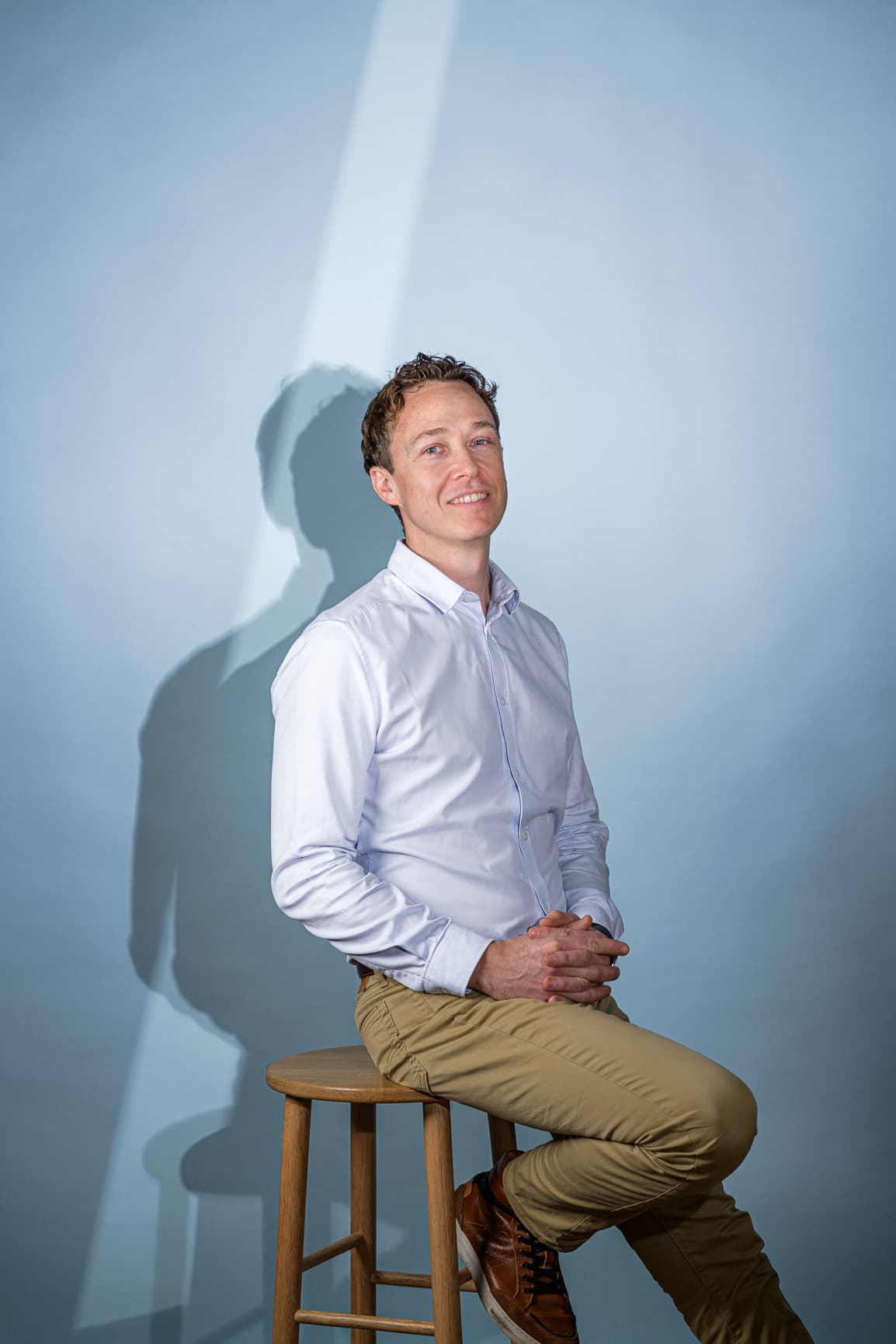
CHARLES-EDOUARD RAY
Head of Product
We combined cutting-edge technical expertise with a design concept in line with space marketing requirements. On the technology side, this meant mastering 3D on mobile and web platforms. On the design side, we had to adapt to business and marketing needs, reflecting the technicality and precision of space engineering.
Our Client
SES, a global leader in satellite connectivity solutions, has been driving the evolution of telecommunications on an international scale since 1985. A pioneer with the launch of Astra in 1988, the company now operates a hybrid fleet of over 70 satellites in both geostationary (GEO) and medium Earth orbit (MEO), notably through the O3b mPOWER system. This infrastructure enables the broadcasting of TV and radio channels to millions of households, whilst providing communication solutions to businesses, telecoms operators and government agencies. Through its satellite and terrestrial network, SES delivers high-performance video and connectivity services.
FREQUENTLY ASKED QUESTIONS - WHEN THE DIGITAL EXPERIENCE REVEALS THE POWER OF SPACE
Why is 3D a key factor in understanding satellite services ?
The services offered by SES rely on complex, invisible infrastructure: orbits, coverage areas and data flows. This type of information is difficult to grasp using traditional media.
The use of interactive 3D brings these concepts to life and makes them immediately understandable. It transforms a technical explanation into a visual demonstration, which helps the client visualise the concept and reinforces the impact of the message. This is not merely an aesthetic choice, but a genuine tool for simplification and persuasion.
How does this app fit into a sales enablement strategy ?
The application does more than simply present content; it structures and enriches the sales pitch. In a B2B context, where sales cycles are long and proposals are complex, having an interactive tool allows the sales presentation to be tailored to the prospect. The sales representative can navigate, illustrate, zoom in on specific cases and answer questions in real time.
This marks a shift from a static medium to a sales enablement tool, capable of enhancing the quality of interactions and improving the effectiveness of field teams.
What are the technical challenges involved in delivering a cross-platform 3D experience?
Delivering a real-time 3D experience across multiple platforms presents a significant challenge. Each environment, mobile, touchscreen desktop or web, imposes different constraints in terms of performance, graphics rendering and interaction. Opting for a cross-plateforme approach allows for shared development, but requires a high degree of optimisation to ensure a smooth experience across all platforms. The use of technologies such as WebGL makes 3D accessible directly within the browser, without external dependencies, whilst maintaining a high level of quality.
Why did you design an experience suitable for multiple usage contexts (mobile, living room, web)?
Commercial applications vary greatly depending on the situation. A demonstration at a trade fair stand does not meet the same expectations as a client meeting or a remote presentation.
Offering multiple formats allows the experience to be tailored to each context. The large touchscreen enhances immersion and appeal, the mobile device allows for more flexible use, and the web ensures immediate accessibility.
This approach ensures continuity in the sales journey, regardless of the point of contact with the prospect.
What impact does an immersive experience have on sales performance ?
In complex environments such as the space industry, the main challenge is often understanding what is on offer. A well-designed immersive experience helps to overcome this obstacle.
It improves the clarity of the message, boosts credibility and makes it easier to remember. The prospect no longer just listens; they see and understand. This helps to shorten decision-making cycles and sets the company apart from competitors using more traditional approaches.