From craftsmanship to emotion through 3D scenes
EXPERTISES
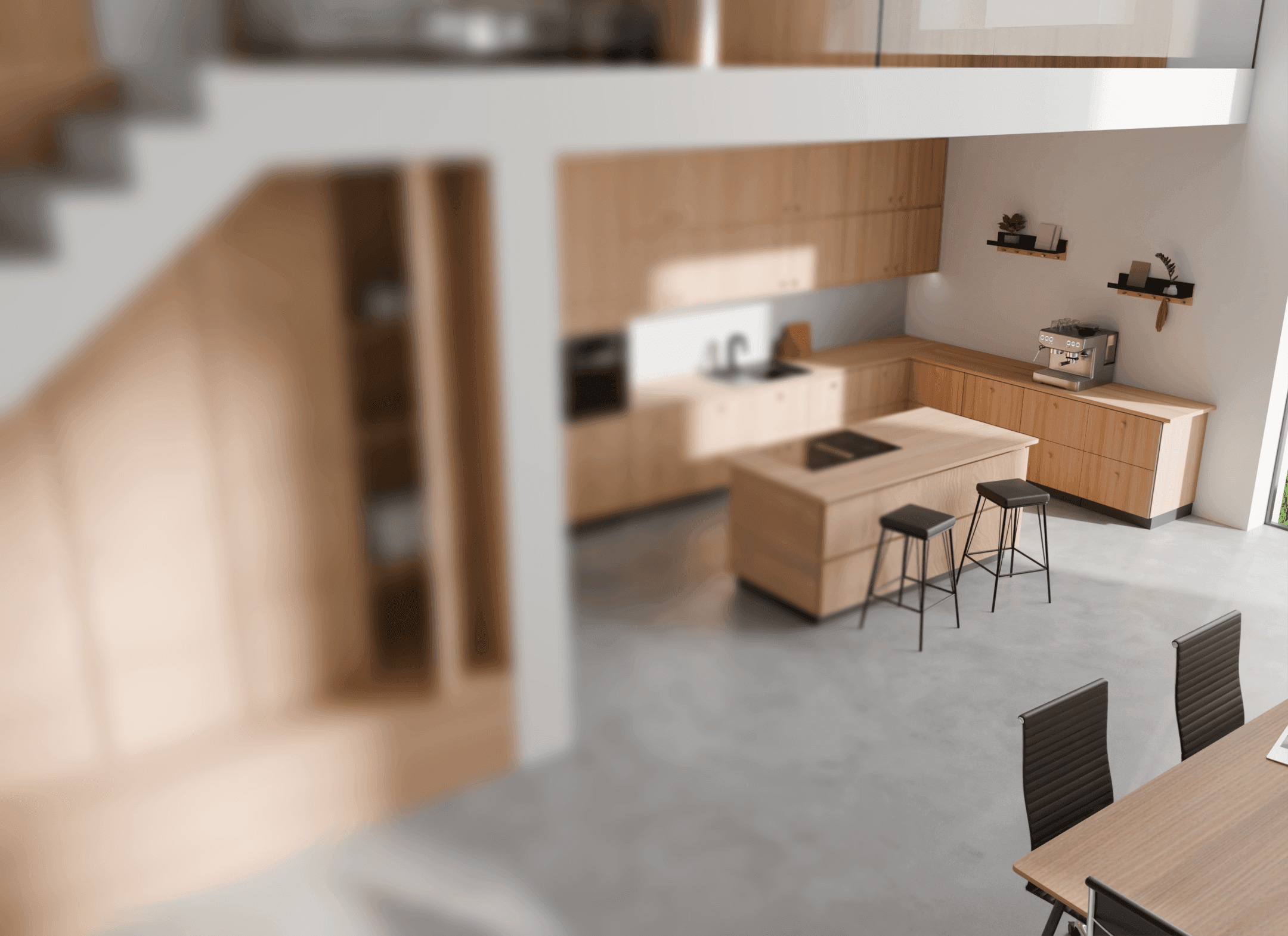
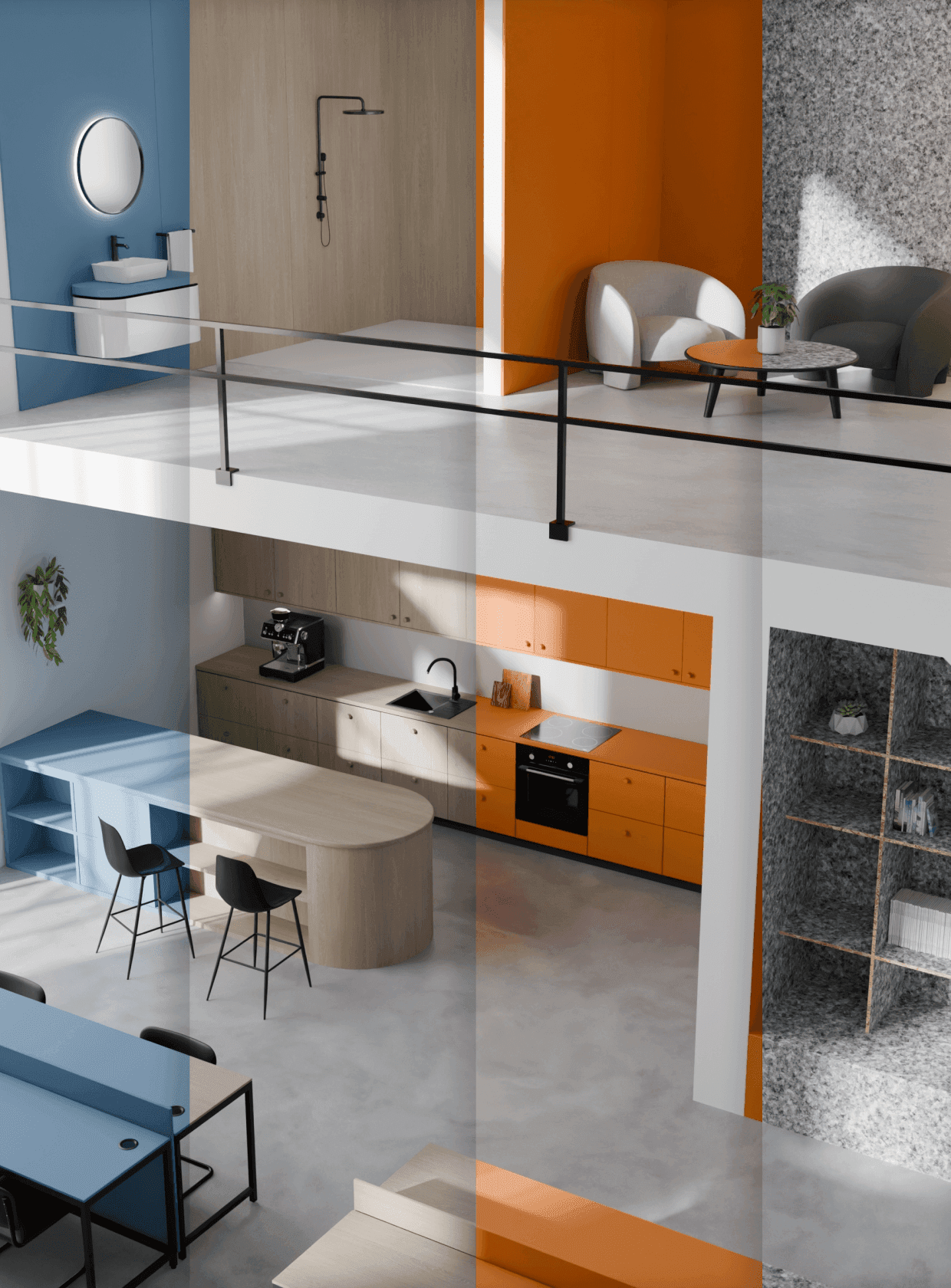
Polyrey, a leading French manufacturer of decorative panels and technical laminates, wanted to offer its customers and prospects a visual experience that matched the quality of its materials. The challenge was to create a visual presentation that was both realistic and evocative within a variety of architectural settings, in order to showcase the full range of applications for its product lines. We therefore designed a library of ultra-realistic 3D scenes, featuring Polyrey and Résopal materials in the French and German markets, to inspire and appeal to architects, designers and specifiers seeking new ideas.
3D renderings
different designs for Polyrey
3D renderings
different designs for Résopal
CHALLENGES
Marketing
This 3D device bridges the gap between industrial expertise and emotional experience. Thanks to close collaboration with the Polyrey teams, the visual experience obtained allows customers to project themselves into realistic and inspiring environments, thereby reinforcing the brand's conversion power and desirability.
Design
Meticulous work was carried out on: The management of textures, lighting and reflections in order to reproduce the sensory quality of high-end materials. Aesthetic consistency between Polyrey and Résopal, two entities within the same group, with distinct visual identities and markets. Diversity of use: kitchens, offices, public spaces, hotels, healthcare, etc.
Tech
Meticulous work was carried out on: The management of textures, lighting and reflections in order to reproduce the sensory quality of high-end materials. Aesthetic consistency between Polyrey and Résopal, two entities within the same group, with distinct visual identities and markets. Diversity of use: kitchens, offices, public spaces, hotels, healthcare, etc.
A SCALABLE APPROACH TO 3D VISUALISATION
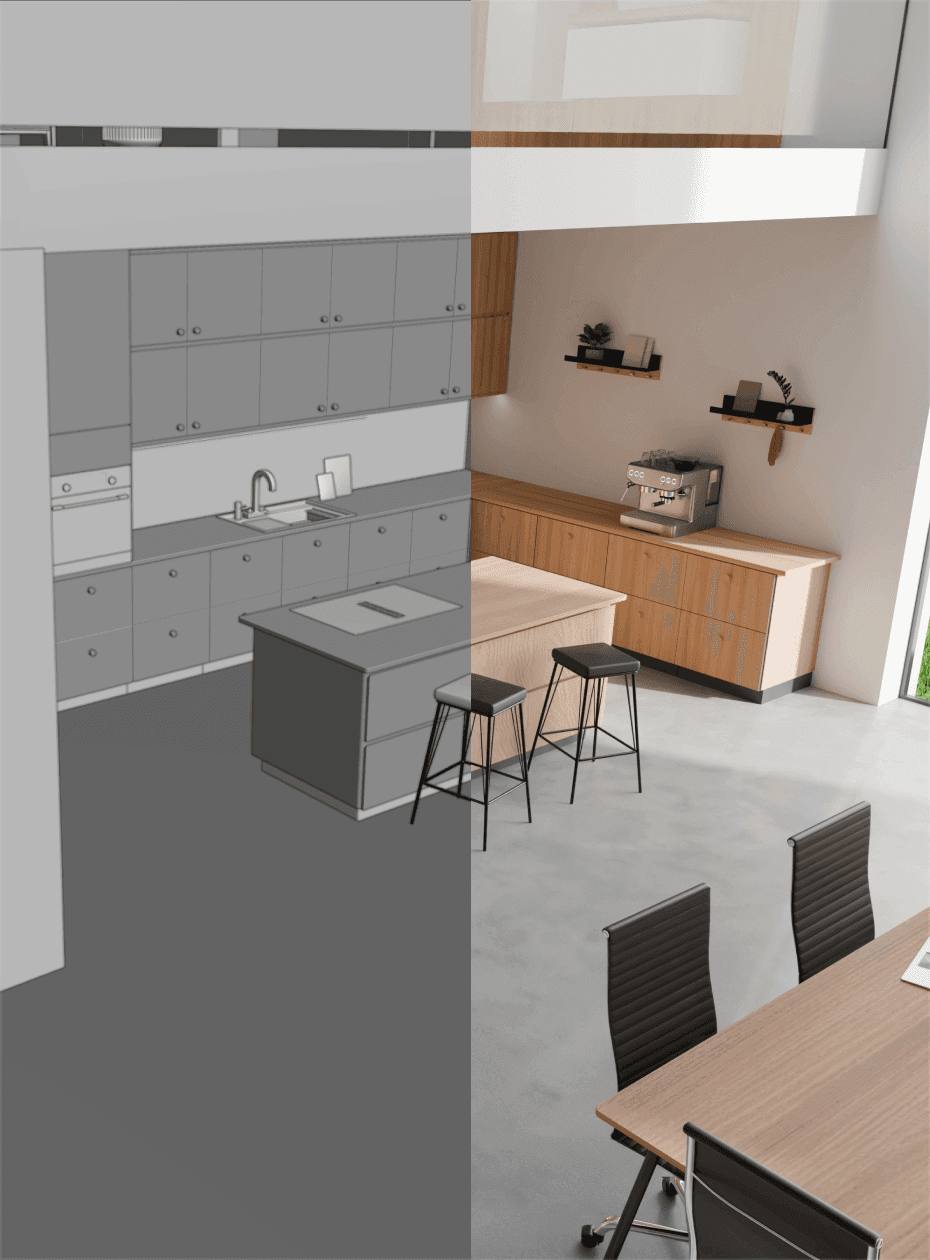
This project has enabled Polyrey and Résopal to take a new step forward in promoting their materials. By combining aesthetic standards, technical expertise and automation, BeTomorrow has built a library of photorealistic 3D scenes capable of reproducing the sensory quality of surfaces and the diversity of their uses in a variety of architectural settings. Beyond the production of renderings, this approach has created a real source of inspiration and conversion: a consistent visual experience for two brands, designed to help architects, designers and specifiers to visualise their projects more easily. Driven by close collaboration and shared trust between the teams, the solution delivered combines industrial expertise and emotion, while laying the foundations for a scalable and sustainable system for the brand's future needs.
ANAÏS PARENTEAU
Head of Marketing
Working with the Polyrey team was a great opportunity to set up a high-performance 3D rendering pipeline. With a large catalogue of designs, each rendering phase can take a considerable amount of time for high-resolution renderings. It was therefore necessary to take a gradual and pragmatic approach in order to iterate quickly with the various specialists involved in this project. Combining automation, 3D rendering engineering and attention to detail, we were able to design a solution to showcase Polyrey products through high-quality illustrations.
Our Client
Polyrey, France's leading manufacturer of decorative panels and technical laminates, wanted to offer its customers and prospects a visual experience that matched the quality of its materials. The challenge was to enable realistic and emotional projection into a variety of architectural settings to illustrate the wide range of possible uses for its panel ranges.

FREQUENTLY ASKED QUESTIONS — 3D VISUALISATION OF PREMIUM MATERIALS
Does 3D visualisation replace traditional media (photos, samples, showrooms) ?
It complements and enhances existing systems. 3D rendering makes it possible to visualise materials in an infinite variety of settings, where photography or showrooms naturally reach their limits. It therefore serves as a powerful tool for exploration and visualisation, complementing the tools already in place, whilst enriching the user experience in a seamless and inspiring way.
How is 3D technology transforming the way decorative materials are presented ?
It no longer simply showcases a product; it demonstrates how it is used. Architectural visualisation allows the material to be placed within a setting, conveys the design intent, and makes its aesthetic and functional value immediately apparent.
How can we ensure consistency between the 3D rendering and the actual material ?
The project is based on advanced work in reproducing textures, finishes and surface behaviours (light, reflections, depth). The aim is not merely aesthetic, but also perceptual : to reproduce the material’s reality as accurately as possible.
How can you manage the production of hundreds of 3D renderings without compromising on quality?
Managing the production of hundreds of 3D renders without compromising on quality relies on the implementation of a structured and industrialised pipeline. Using modelling tools such as Blender, Python automation scripts and rigorous production methodologies, each scene is designed as a reproducible system. This approach allows us to combine volume, visual consistency and rendering standards, whilst ensuring consistent quality at scale.
In what way does this 3D technology go beyond simply producing images ?
This is a strategic content library, designed to be deployed across all touchpoints: the web, sales tools, catalogues and communications. 3D becomes a key element of the brand’s identity.
How does 3D contribute to sales performance?
Thanks to the use of 3D, the gap between the image and reality is narrowed, making it easier for the customer to visualise the project and speed up the decision-making process.
Is the system designed to evolve over time ?
Simple app development using standard frameworks such as React Native or Flutter is generally not considered eligible. However, if your project includes genuine R&D phases such as algorithm optimisation or the design of a specific data architecture to process very large volumes of data in real time, these specific aspects may fall within the scope of eligibility.