Making field operations safer with a connected operator
EXPERTISES
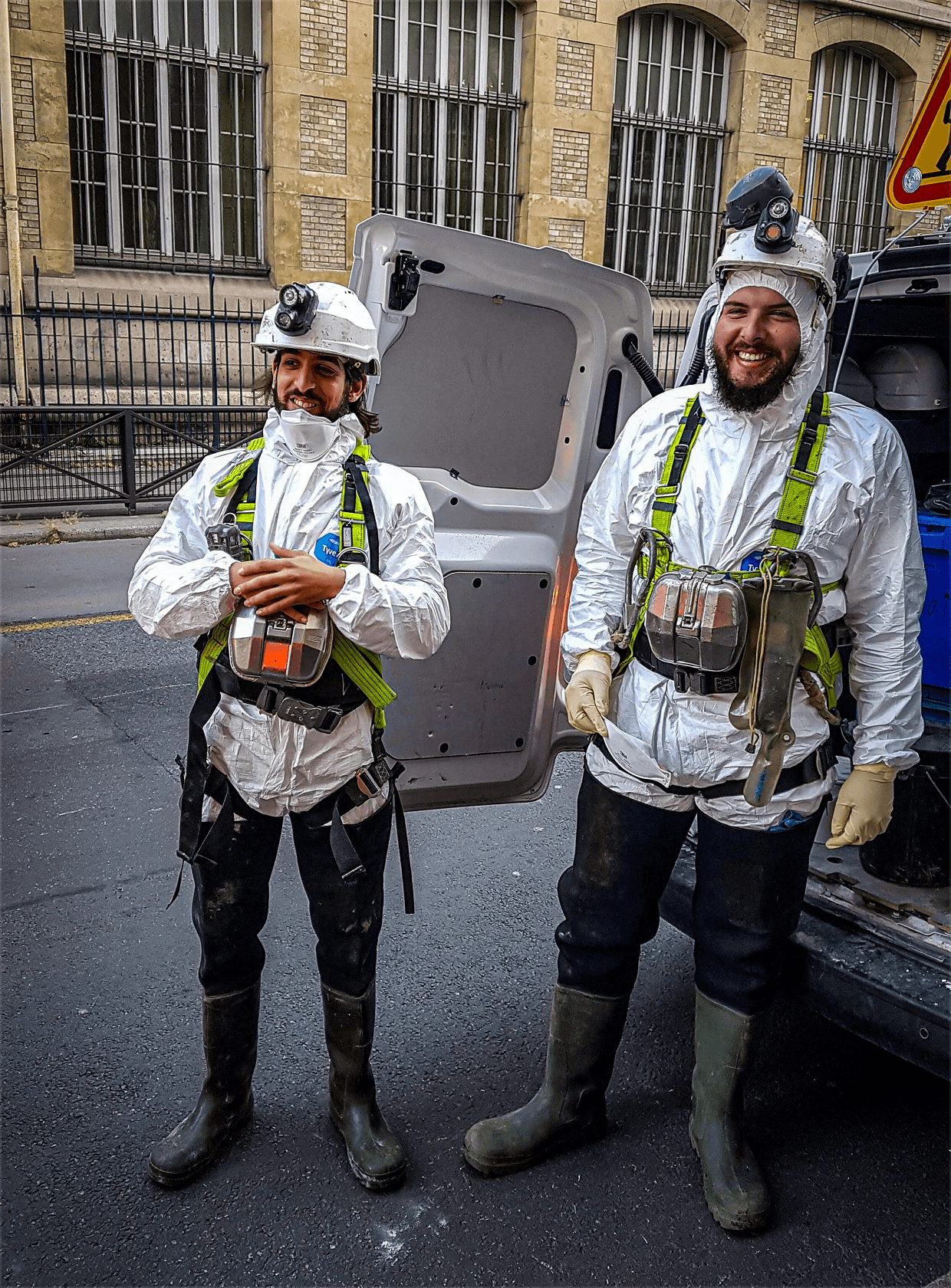
In underground sewer networks, workers operate in confined, hard-to-access and hazardous environments, where communication with the surface and the quality of the data collected are essential.
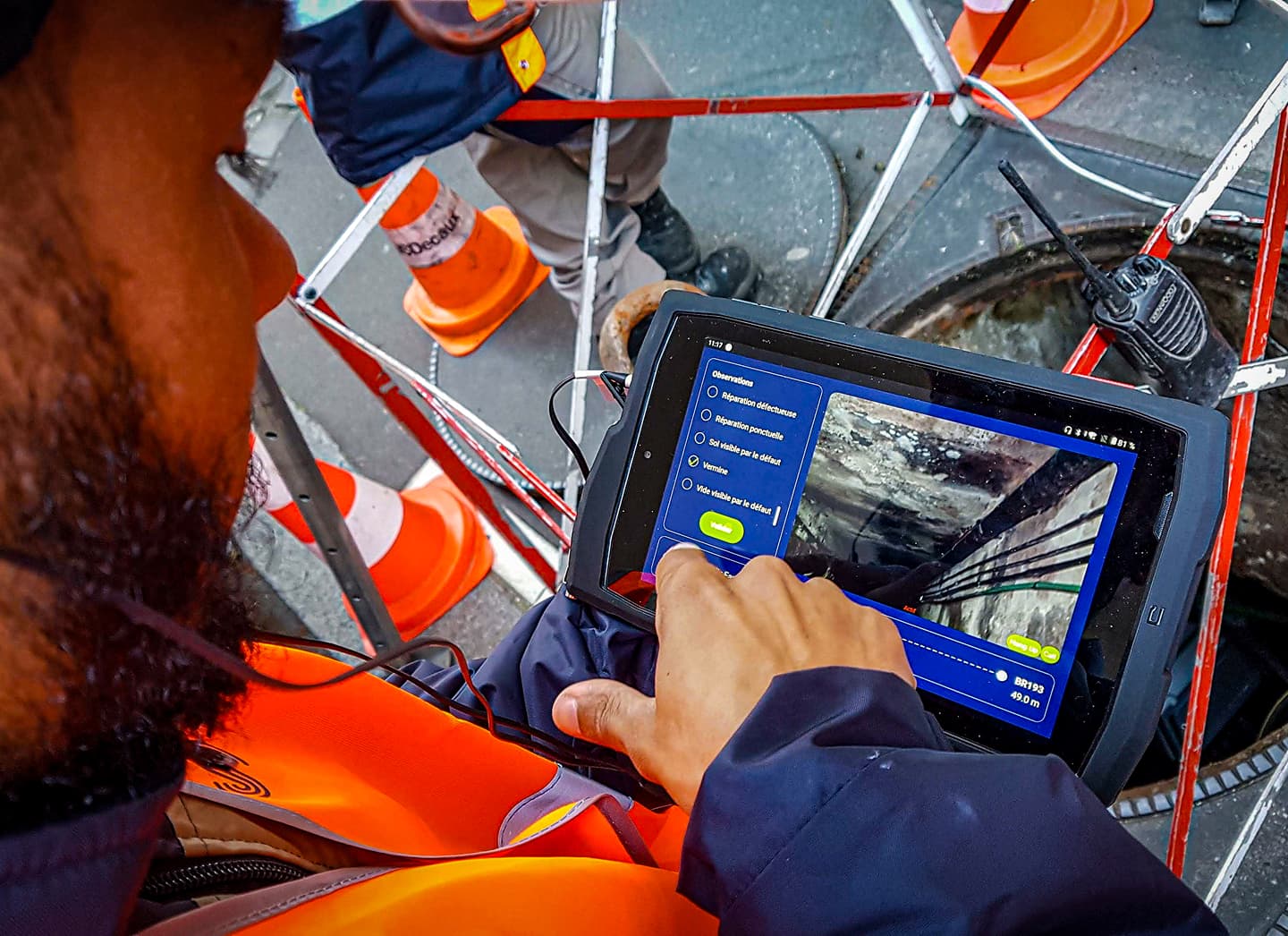
BeTomorrow supported SUEZ / LyRE in designing a connected operator solution combining an Android tablet app, on-board hardware, sensors, video, audio, UWB positioning and a local Wi-Fi / PoE network.
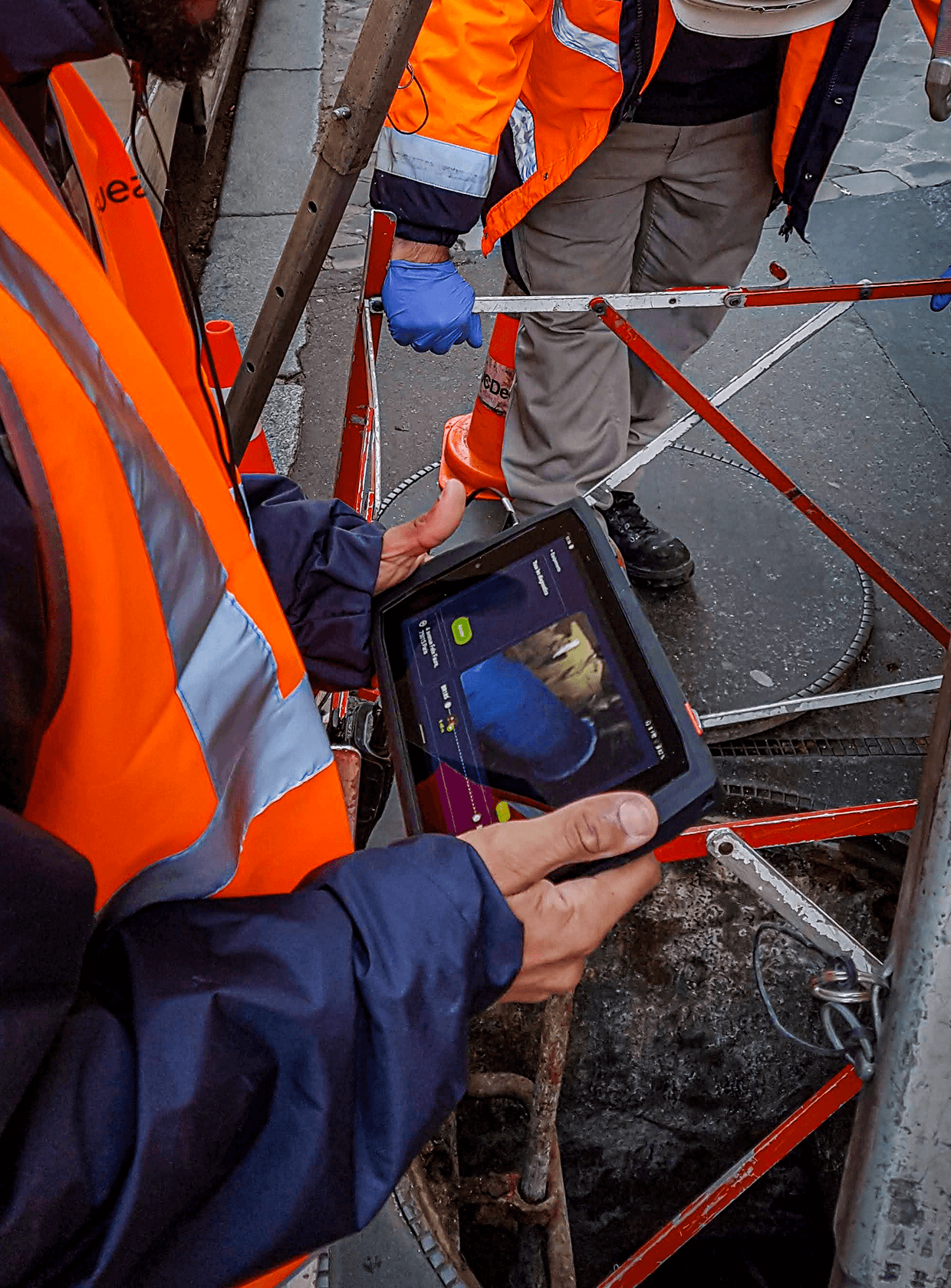
The app enables operators to manage inspections, track equipment, document findings, trigger alerts and generate actionable reports. Beyond software development, BeTomorrow assembled, configured and delivered several operational kits for various SUEZ sites, transforming a technical concept into a fully deployable field solution.
critical data consolidated into a single tool
Centralised management of audio, video and photo communications, alerts, location data, equipment status, identified faults and inspection reports to ensure reliable field monitoring.
continuous link between surface and operator
A dedicated local Wi-Fi network to secure communications between the underground operator and the supervisor on the surface, even in an environment with poor connectivity.
ready-to-use kits delivered on site
A solution that has moved from the laboratory to the field, with complete kits assembled, configured and deployed at various SUEZ sites.
CHALLENGES
Product
One of the project’s key challenges was to transform a complex and risky operation into a field operation that was clearer, smoother and better managed. Field staff needed to be able to access essential information quickly, document their findings and stay connected with the field, even under highly constrained operational conditions.
This ambition led to the design of a mobile tablet app conceived as the central control point for the mission. It enables the tracking of equipment, the organisation of collected data, the recording of observed faults and the generation of actionable reports following the operation.
Design
In an underground environment, the user experience cannot be approached in the same way as a conventional app. Operators work in physically demanding conditions, having to divide their attention between their own safety, their progress through the network, and the data they need to collect.
The interface therefore had to prioritise clarity, quick access to key actions and continuity of use between the agent in the network and the supervisor on the surface. The project thus enabled the design of an experience tailored to the realities on the ground, where every interaction must help to strengthen confidence and the effectiveness of the operation.
Tech
The technical design of the Connected Operator is based on a hybrid hardware/software architecture. The Android tablet app integrates with an embedded ecosystem comprising Raspberry Pi devices, cameras, gas sensors, Bluetooth headsets, UWB location tags, an on-board power supply and a Wi-Fi/PoE local network.
One of the major technical challenges was to ensure communication between operators in the underground network and the supervisor on the surface, in an environment where conventional connectivity is insufficient. BeTomorrow therefore set up a local field network and developed the necessary business functionalities: audio and video transmission, photo capture, location tracking, alerts, equipment status monitoring and report generation.
Agility
The project required the coordination of a wide range of elements: a mobile app, embedded hardware, a local network, sensors, security constraints and deployment across multiple sites. This complexity called for a pragmatic, iterative approach that was closely aligned with practical realities on the ground.
Beyond software development, BeTomorrow took charge of the assembly, configuration and delivery of several operator kits, enabling the transition from a solution designed in the laboratory to an operational system usable in real-world scenarios.
WHEN A CONNECTED SOLUTION MAKES A DIFFERENCE IN THE FIELD
This project illustrates situations where value lies not only in the development of an application, but in the ability to design a comprehensive, reliable operational ecosystem tailored to the real-world constraints on the ground.
For SUEZ / LyRE, the challenge was to ensure the safety of operations in underground, confined and hard-to-access environments, whilst improving communication with the surface, the documentation of inspections and staff confidence during descents into the network. BeTomorrow’s solution combined a mobile app, on-board hardware, sensors, a local network, audio/video transmission and report generation, as part of an integrated approach.
This bespoke approach demonstrates BeTomorrow’s ability to deliver on projects where the product, field design, technology and agility must work together to address critical business challenges. Beyond the solution deployed, the project lays the foundations for a scalable system capable of integrating new features such as plug-and-play sensors, voice input and long-term monitoring of inspections.
Our Client
ALEXANDRE VENTURA
Innovation project manager at SUEZ
Our collaboration with the BeTomorrow project managers, their working methods and their vision, has always gone smoothly. Sometimes, BeTomorrow brings in another UX designer or developer to share their experience and insights. You might think this serves no purpose, but on the contrary, it challenges us and enriches the project. It’s very interesting. We involved a lot of people at Suez, particularly those on the ground. We wanted to develop an app that met their expectations to encourage adoption. Here again, the BeTomorrow teams were able to identify their needs and engage with everyone to fully understand the challenges.

FREQUENTLY ASKED QUESTIONS — OPERATOR WORKING IN A CONFINED SPACE
Why was a mobile app alone not enough to meet SUEZ’s operational requirements ?
Because the requirement went beyond simply digitising an inspection form. Operations in underground networks require seamless communication between the operator working in the network and the supervisor remaining above ground. In this context, the application had to be integrated into a comprehensive system capable of managing audio and video communication, photo capture, alerts, location tracking, gas sensors and equipment monitoring.
The value of the project therefore lies in the integration between software, embedded hardware and the local field network. The tablet app serves as the control interface, but it is the complete ecosystem that makes the operation safer and more controlled.
How can we design a reliable user experience in an underground environment ?
In an underground environment, the user has neither the comfort nor the attention span available in an office or consumer setting. The interface must focus on the essentials: making critical actions quickly accessible, minimising cognitive load, organising mission information and enabling easy recording of observations.
The design must also take into account operational stress, physical constraints, the need to wear equipment, poor visibility and the constant need to remain connected to the surface. In this type of project, UX does not merely seek to simplify usage: it contributes directly to the safety of the operation.
What role does the IoT play in ensuring the safety of field workers ?
The IoT enables operators to stay connected to their working environment. Gas sensors, cameras, UWB location tags, Bluetooth headsets and on-board Raspberry Pi devices create a system capable of transmitting field data in real time or near real time.
This approach enables better monitoring of equipment condition, improves communication with the surface, documents inspections and reduces areas of uncertainty during operations. In a high-risk environment, this data is not merely useful: it becomes a tool for decision-making and reassurance for teams.
How can communication between the underground network and the surface be ensured when standard connectivity is insufficient?
One of the project’s major technical challenges was to avoid relying solely on conventional networks, which are often unreliable or unavailable in underground environments. BeTomorrow therefore set up a local field network, based primarily on a Wi-Fi/PoE infrastructure, comprising a router, switch, antennas and a fixed IP configuration.
This architecture enables communication between operators in the network and the supervisor on the surface: audio communication, video transmission, alert reporting, equipment tracking and centralisation of mission information.
How does this project improve the quality of inspection data ?
Even before the report is generated, the quality of the data depends on how it is collected in the field. The system enables this data collection to be structured right from the start of the operation: photos, videos, location data, observed faults, equipment condition and mission details are centralised in an app designed for field use.
The result: inspections are better documented, findings are more actionable after the intervention, and teams have a more reliable basis for monitoring operations, analysing faults and planning future developments such as plug-and-play sensors, voice input or long-term inspection monitoring.